
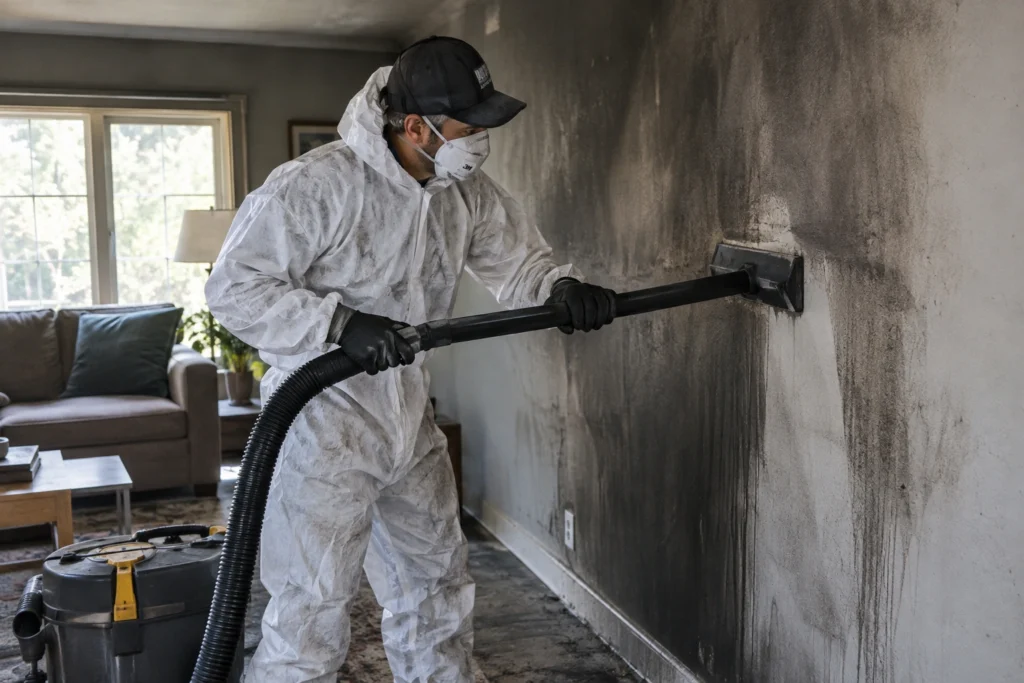
A house fire doesn’t have to reach every room to ruin every room. Smoke travels through hallways, HVAC ducts, and even closed doors, leaving behind soot, acidic residue, and an odor that can linger for months if it isn’t treated correctly. Whether the fire was a small kitchen mishap or a major structural blaze, knowing how to handle smoke damage restoration in the right order is what separates a full recovery from a home that never quite smells or looks “clean” again.
If you’re dealing with fire and smoke damage in Rockford, IL right now, call (815) 324-8004 for a free inspection. Otherwise, here’s exactly how professionals approach smoke damage restoration from start to finish.
What Is Smoke Damage Restoration?
Smoke damage restoration is the process of removing soot, neutralizing smoke odor, and repairing the surfaces and systems affected after a fire. It’s different from basic cleaning because smoke residue is acidic, it embeds itself in porous materials like drywall and fabric, and it circulates through your home’s ductwork long after the flames are out. Left untreated, that residue continues to corrode metal, discolor paint, and off-gas odor-causing particles for weeks.
Not all smoke behaves the same way, which is why a proper smoke damage assessment matters before any cleanup begins:
- Dry smoke comes from fast, high-heat fires (like wood or paper). It leaves a powdery residue that’s easier to wipe away but often signals more intense structural heat damage.
- Wet smoke comes from slow-smoldering fires (like a kitchen fire fueled by plastics or rubber). It’s sticky, smears easily, and produces a much stronger, harder-to-remove odor.
- Protein residue comes from kitchen fires involving food. It’s often invisible but carries an extremely strong, sour odor.
Each type requires a different cleaning approach, which is why DIY smoke cleanup so often falls short.
Step-by-Step: How to Handle Smoke Damage Restoration
1. Prioritize Safety Before Touching Anything
Before any cleanup starts, make sure the fire department has cleared the structure, the electricity is off in affected areas, and there’s no risk of structural collapse or gas leaks. Soot particles are fine enough to inhale deeply into your lungs, so avoid extended time in the space without an N95 respirator, gloves, and eye protection.
2. Document the Damage for Insurance
Photograph every affected room, damaged item, and visible soot line before you clean or move anything. This documentation is what your insurance adjuster will use to evaluate your claim, and it’s much harder to prove damage after the space has been disturbed.
3. Ventilate the Property
Open windows and doors where it’s safe to do so, but don’t run your HVAC system yet-doing so can pull soot deeper into your ductwork and spread it to unaffected rooms.
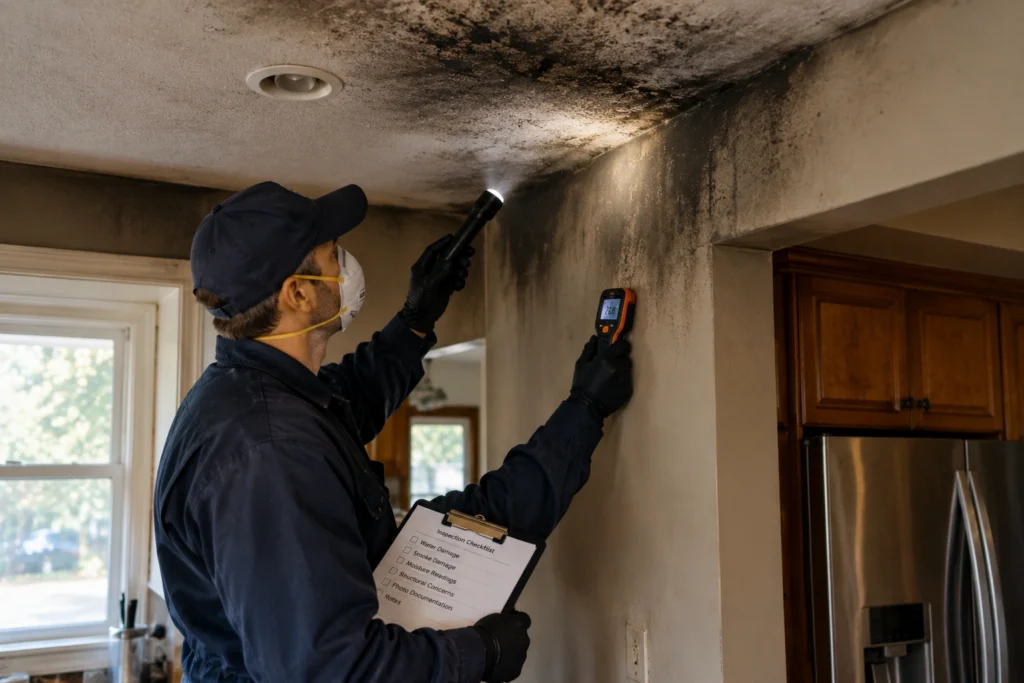
4. Get a Professional Smoke Damage Assessment
A certified technician will inspect every surface, including areas that look untouched. Smoke rises and settles into attics, behind outlets, and inside wall cavities, so a full smoke damage assessment is what determines the real scope of the job-not just the rooms closest to the fire.
5. Remove Soot and Residue
This is the core of soot damage removal: using HEPA vacuums, dry chemical sponges, and specialized cleaning agents to lift soot from walls, ceilings, and hard surfaces without smearing it further into the material. Regular household cleaners often make soot stains worse because they push acidic residue deeper into porous surfaces.
6. Eliminate Smoke Odor
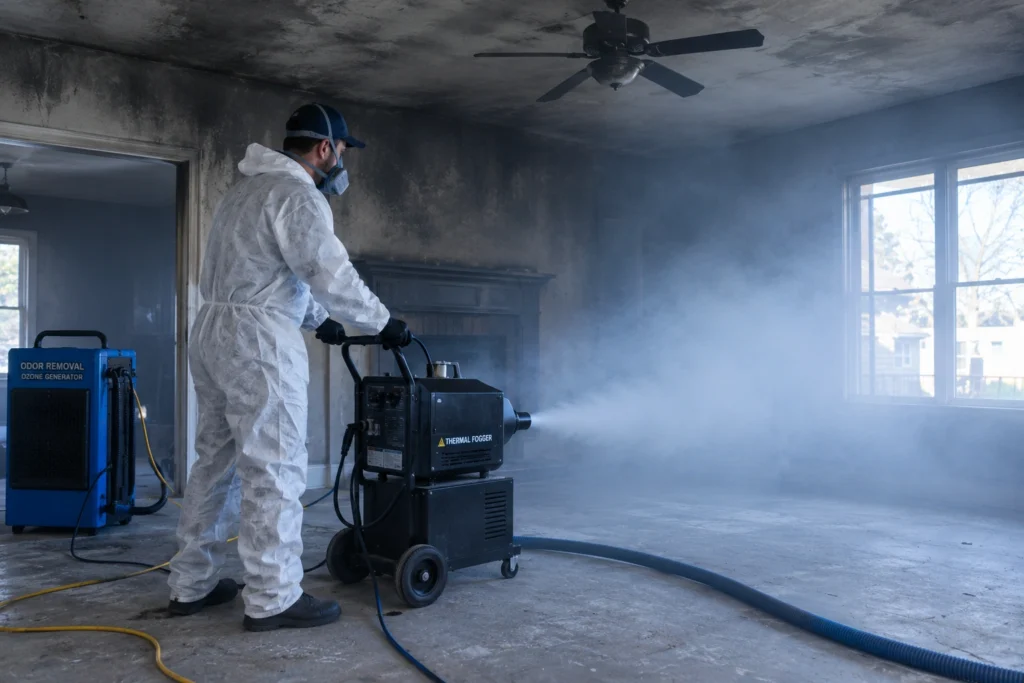
Odor is the part homeowners underestimate most. Masking a smoke smell with air fresheners doesn’t work because the odor molecules are still physically present in your walls, carpet, and fabric. Professional smoke odor removal from hard surfaces combined with thermal fogging and ozone or hydroxyl treatments actually neutralizes the odor at the molecular level. For homes with especially stubborn or chemical-heavy odors, toxic odor and volatile emission cleanup and full deodorization services are typically needed alongside standard cleaning.
7. Clean the HVAC System
If your air handler or ductwork was running during or shortly after the fire, smoke particles are almost certainly circulating through your entire duct system. HVAC smoke cleaning prevents the smell from returning every time your heat or air conditioning kicks on, and it’s a step that’s easy to overlook if you’re managing cleanup yourself.
8. Repair Structural and Cosmetic Damage
Once residue and odor are addressed, the repair phase begins. Depending on severity, this may involve smoke-damaged drywall repair, smoke-stained ceiling cleanup, or in more serious cases, full structural fire damage repair. Charred framing, insulation, and flooring may need to be removed entirely through charred material removal or demolition of fire-damaged areas before rebuilding can start.
9. Restore Personal Belongings
Furniture, electronics, clothing, and documents can often be saved rather than replaced. Fire-damaged contents cleaning uses specialized ultrasonic cleaning, ozone chambers, and textile restoration to save items that would otherwise be a total loss-which can significantly reduce your out-of-pocket costs after an insurance settlement.
10. Final Sanitation and Clearance
The last step is a full smoke damage sanitation pass to disinfect every treated surface, followed by a final walkthrough to confirm no odor or residue remains. For larger fires affecting multiple rooms or shared walls, this may require whole-building fire and smoke odor removal rather than a room-by-room approach.
DIY vs. Professional Smoke Damage Restoration
Minor smoke damage, like light residue from a small, quickly extinguished kitchen fire, can sometimes be handled with careful surface cleaning. But you should call a professional restoration company if:
- The fire involved more than one room or reached the ceiling/attic
- You smell smoke odor days after ventilating the home
- Soot has visibly entered HVAC vents or return air ducts
- You’re unsure whether electronics, insulation, or framing were compromised
- Your insurance company requires documented professional remediation
Smoke residue is acidic and mildly corrosive, so the longer it sits untreated, the more damage it does to metal fixtures, electronics, and finishes. What looks like a same-day cleanup job often turns into weeks of hidden deterioration if it’s not handled by trained technicians the first time.
How Long Does Smoke Damage Restoration Take?
A single-room, minor smoke event with no structural damage can often be resolved in 1–3 days. Whole-home smoke damage, especially with odor embedded in HVAC ducts and multiple rooms, typically takes one to three weeks, factoring in assessment, cleaning, odor treatment, drying time between steps, and any drywall or ceiling repairs. Fires involving significant structural loss can extend into months when demolition and rebuilding are required.
Smoke Damage Restoration for Rockford, IL Homeowners
Common causes of residential smoke damage in our area include kitchen fires, electrical shorts, and garage fires involving stored fuel or chemicals-each of which spreads smoke differently through a home. If your fire started in the kitchen, our kitchen fire cleanup and restoration service is built specifically around grease-based smoke and protein residue. For fires that began in an attached garage, garage fire cleanup addresses the unique fuel and chemical byproducts often involved.
24/7 Restoration Experts responds to smoke and fire damage calls throughout Rockford and Winnebago County, including neighborhoods like Hawthorn Hills, Highland Area, and Southeast Rockford. Our technicians arrive within 60 minutes for emergency calls and work directly with your insurance adjuster to document the full scope of smoke and soot damage. You can view our complete list of service areas we serve or browse all restoration services we offer, from water and mold remediation to full fire and smoke recovery.
A Note on Health and Air Quality
Smoke exposure isn’t just a property issue-it’s a health issue. According to the <a href=”https://www.epa.gov/emergencies-iaq/wildfires-and-indoor-air-quality-iaq” target=”_blank” rel=”noopener noreferrer”>U.S. Environmental Protection Agency</a>, fine particles from smoke and ash can irritate the eyes, nose, and lungs, and cleanup work should be avoided by children, older adults, and anyone with existing heart or lung conditions. This is one more reason professional smoke damage restoration-complete with proper PPE, air filtration, and containment-is worth the investment over DIY cleanup.
Don’t Let Smoke Damage Linger
The single biggest mistake homeowners make is waiting. Every day that soot and odor sit untreated, the damage spreads further into your walls, ducts, and belongings-and the cost of restoration climbs with it. If you’re dealing with fire or smoke damage anywhere in Rockford, IL, our certified team is available 24/7 for a free inspection and quote.
Call (815) 324-8004 now, or contact us online to schedule your free smoke damage inspection today.
Leave a Reply