
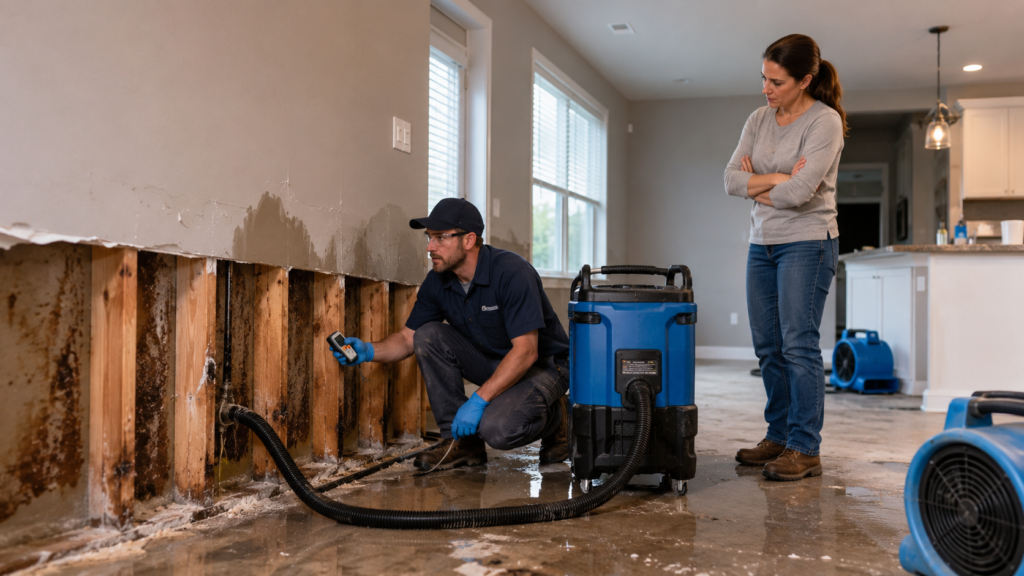
Rockford’s weather doesn’t do homeowners any favors. Between freezing winters that crack pipes, heavy spring rains that overwhelm sump pumps, and humid summers that turn basements into mold incubators, water damage is one of the most common – and most misunderstood – problems local homeowners face.
The good news? Most water damage disasters are manageable when you know what to do, who to call, and how to prevent them from becoming bigger (and more expensive) problems. This guide walks you through everything from the first five minutes after you discover a leak to the long-term strategies that keep mold from ever coming back.
Whether you’re dealing with a soaked ceiling right now or simply want to be prepared before disaster strikes, consider this your go-to resource for water damage restoration and mold prevention in Rockford, IL.
What Should You Do Immediately After Water Damage?
The first hour after discovering water damage matters more than almost anything else in the entire restoration process. Acting quickly can mean the difference between a same-day fix and weeks of repairs.
1. Prioritize Safety
If water is anywhere near electrical outlets, panels, or appliances, don’t walk through it. Shut off power at the breaker box if you can safely reach it. If ceilings are sagging or floors feel soft, stay out of that area entirely until it’s been inspected.
2. Stop the Water Source
Shut off your home’s main water valve if the damage is plumbing-related. If it’s from an appliance, disconnect the supply line immediately.
3. Document the Damage
Before you move or remove anything, take photos and videos. Insurance adjusters rely heavily on this documentation, and it protects you if disputes arise later.
4. Begin Water Removal
While you wait for professional help, you can start removing standing water with towels or a wet/dry vacuum, and move furniture and belongings to a dry area.
5. Call a Professional Restoration Company
This is the step most homeowners underestimate. Rockford’s humidity and temperature swings mean mold can begin forming in as little as 24 to 48 hours. Professional-grade extraction and drying equipment reaches moisture trapped in walls, subfloors, and insulation that household tools simply can’t address.
Who Should You Call When You Have Water Damage?
Knowing who to call – and in what order – saves valuable time.
Call a Certified Water Damage Restoration Company First
Look for IICRC-certified technicians (Institute of Inspection, Cleaning and Restoration Certification). These professionals are trained specifically in water extraction, structural drying, and mold prevention – not just cleanup.
Why a Plumber Alone Isn’t Enough
A plumber can stop the leak, but they’re not equipped to dry your home’s structure or prevent mold growth. Many Rockford homeowners make the mistake of thinking the job is done once the leak is fixed, only to discover mold weeks later.
Then Call Your Insurance Company
Once mitigation is underway, contact your insurer to begin the claims process. A good restoration company will help you document everything in a way that supports your claim.
When You Might Need a Contractor or Structural Engineer
If water has compromised support beams, subfloors, or load-bearing walls, you’ll need a licensed contractor or structural engineer to evaluate repairs after the drying process is complete.
Local Expertise Matters
A Rockford-based restoration company understands local risks – from Rock River flooding to the aging plumbing systems common in older neighborhoods – and can typically respond faster than a national franchise.
What Is the Difference Between Water Damage Remediation and Restoration?
These two terms get used interchangeably, but they describe distinct phases of recovery.
Remediation is about stopping the problem: extracting water, removing damaged materials, drying the space, and applying antimicrobial treatments to prevent mold.
Restoration is about rebuilding: replacing drywall, flooring, and insulation, repainting, and returning your home to its pre-damage condition.
Comparison Table: Remediation vs. Restoration
| Feature | Water Damage Remediation | Water Damage Restoration |
|---|---|---|
| Primary Goal | Stop damage and create a safe environment | Rebuild and repair the home |
| Timing | Happens first, immediately after damage | Happens after remediation is complete |
| Key Tasks | Water extraction, drying, dehumidification, mold prevention | Drywall replacement, flooring, painting, structural repair |
| Equipment Used | Extractors, air movers, dehumidifiers, moisture meters | Construction tools, materials, finishing supplies |
| Typical Duration | 2-5 days | Varies by damage severity, days to weeks |
| Focus | Safety and mitigation | Recovery and rebuilding |
Most significant water events – floods, burst pipes, long-term leaks – require both phases in sequence. Skipping remediation and moving straight to rebuilding is one of the most common (and costly) mistakes homeowners make.
What Should You Do If You See Water Damage on Your Ceiling?
A stained, sagging, or bubbling ceiling is one of the clearest signs of a hidden water problem – and one of the most urgent to address.
Warning Signs to Watch For
- Brown or yellow discoloration
- Sagging or bulging drywall
- Peeling paint or bubbling texture
- A musty smell in the room
- Dripping or active leaking
Immediate Steps
- Don’t touch or poke the ceiling. A bulging ceiling may be holding back pooled water, and puncturing it without proper containment can cause a sudden collapse.
- Place a bucket or tarp under the affected area if water is actively dripping.
- Identify the likely source – this is often a roof leak, an upstairs bathroom, or HVAC condensation.
- Turn off power to any light fixtures in the affected ceiling area.
- Call a professional to assess both the ceiling and whatever is above it, since ceiling damage almost always indicates a bigger issue in the attic, roof, or upstairs plumbing.
Ceiling water damage is rarely a standalone problem – it’s a symptom of something happening above, and addressing only the visible ceiling without finding the source guarantees the problem will return.
Can Mold Grow on a Water-Damaged Ceiling?
Yes – and often faster than homeowners expect. Ceiling drywall, insulation, and the wood framing behind it are all organic, porous materials that retain moisture and provide an ideal food source for mold spores.
Why Ceilings Are Especially Vulnerable
Ceilings often trap moisture longer than walls or floors because airflow is limited and the damage isn’t always visible until it’s already extensive. By the time you see a stain, mold may already be growing on the unseen side of the drywall or in the insulation above it.
Signs Mold May Already Be Present
- A persistent musty odor
- Dark spots or discoloration spreading beyond the original water stain
- Visible fuzzy or slimy patches
- Worsening allergy symptoms when in the room
If you notice any of these signs, it’s time to move beyond simple drying and consider a full mold inspection.
How Long Does It Take for Black Mold to Grow on Wet Drywall?
This is one of the most common – and most important – questions homeowners ask, and the answer is faster than most people realize.
The Mold Growth Timeline
- 24-48 hours: Mold spores begin to germinate on wet drywall in the right conditions
- 3-12 days: Visible mold colonies can begin to appear
- 18-21 days: Mold can become deeply embedded in porous materials, making remediation more difficult
Rockford’s humid summer months significantly accelerate this timeline, since warm, moist air feeds mold growth even faster than in drier conditions.
Why Speed Matters
This rapid timeline is exactly why professional water extraction within the first 24-48 hours is so critical. Waiting even a few extra days can be the difference between simply drying the drywall and having to fully remove and replace it.
Does Mold Come Back After Remediation?
It can – but only if the underlying cause wasn’t fully addressed. Mold remediation removes existing mold colonies and treats affected surfaces, but if moisture, humidity, or the original water source isn’t resolved, mold will return.
Common Reasons Mold Returns
- The original moisture source was never fixed (a slow leak, poor ventilation, etc.)
- Humidity levels in the home remain consistently above 60%
- Remediation only addressed visible mold, not hidden growth behind walls
- Poor airflow in basements, attics, or crawl spaces
How to Prevent Recurrence
A quality remediation company doesn’t just remove mold – they identify and help correct the moisture source, use moisture meters to verify materials are fully dry before closing up walls, and recommend humidity control solutions like dehumidifiers.
What Kills Mold Permanently in a House?
There’s no single product that magically prevents mold forever – permanent mold control is really about combining proper cleaning with moisture management.
Effective Mold-Killing Methods
- Professional-grade antimicrobial treatments used by restoration companies penetrate porous materials more effectively than household cleaners
- HEPA vacuuming and air scrubbing removes spores from the air and surfaces
- Complete removal of severely affected materials (like drywall or carpet padding) when mold has penetrated too deeply to clean
What Doesn’t Work Long-Term
Bleach is a common DIY go-to, but it only kills mold on non-porous surfaces and doesn’t penetrate porous materials like drywall or wood – meaning mold can regrow beneath the surface even after bleaching.
The Real Key: Moisture Control
Mold cannot survive without moisture. The most permanent “cure” for mold isn’t a chemical – it’s controlling humidity, fixing leaks promptly, and ensuring proper ventilation throughout your home.
What Time of Year Is Mold Most Common in Rockford, IL?
Mold growth in Rockford follows a fairly predictable seasonal pattern tied to the region’s climate.
Late Spring Through Summer (May-August)
This is peak mold season. Rising humidity combined with spring rainfall creates ideal conditions, especially in basements and crawl spaces where airflow is limited.
Early Winter (November-December)
Homes are sealed up tightly for heating season, which traps indoor humidity from cooking, showering, and laundry – often without adequate ventilation to let it escape.
Late Winter Thaws and Early Spring (February-April)
Snowmelt and spring storms increase the risk of basement flooding and foundation seepage, both of which can lead to mold if not addressed quickly.
Year-Round Risk Areas
Regardless of season, poorly ventilated basements, bathrooms, and attics remain at risk for mold growth in Rockford homes throughout the year.
How Can Homeowners Prevent Water Damage and Mold?
Prevention is always more affordable than remediation. Here are the strategies that make the biggest difference for Rockford homeowners.
Control Indoor Humidity
Keep indoor humidity between 30-50% using dehumidifiers, especially in basements during summer months.
Maintain Your Gutters and Downspouts
Clean gutters regularly and ensure downspouts direct water at least 5-10 feet away from your foundation.
Inspect Your Roof Annually
Look for missing shingles, damaged flashing, or signs of wear, especially after Rockford’s harsh winters.
Check Your Sump Pump Before Storm Season
Test it every spring and consider a battery backup in case of power outages during storms.
Seal Foundation Cracks
Even small cracks can allow water intrusion over time. Seal them promptly and monitor for new ones.
Improve Ventilation in Problem Areas
Bathrooms, kitchens, and laundry rooms should have functioning exhaust fans vented outside, not into the attic.
Insulate Pipes Before Winter
Prevent frozen and burst pipes by insulating exposed plumbing in unheated areas like garages, attics, and crawl spaces.
Step-by-Step Checklist: What to Do After Discovering Water Damage
- Ensure the area is safe – check for electrical hazards and structural risks
- Shut off the water source or main valve
- Turn off power to affected areas if necessary
- Take photos and videos of all damage before cleanup
- Remove standing water with towels or a wet/dry vacuum
- Move furniture, rugs, and belongings to a dry area
- Increase airflow with fans and open windows if weather allows
- Call a certified water damage restoration company
- Contact your homeowner’s insurance provider
- Schedule a follow-up mold inspection if water sat for more than 24-48 hours
When Is Professional Help Necessary?
While minor spills can sometimes be handled independently, professional help is essential when:
- Water damage covers more than a small, isolated area
- Water has been present for more than 24 hours
- You notice a musty odor or visible mold growth
- The damage involves ceilings, insulation, or structural materials
- You’re unsure whether materials are fully dry beneath the surface
- The water source involved contaminated water (sewage backup, flooding)
Professional restoration teams use moisture meters, thermal imaging, and industrial drying equipment that go far beyond what’s available for home use – ensuring hidden moisture doesn’t turn into a bigger problem down the road.
Frequently Asked Questions
1. How much does water damage restoration typically cost in Rockford, IL?
Costs vary widely based on the extent of damage, ranging from a few hundred dollars for minor water extraction to several thousand for extensive structural repairs. Most restoration companies offer free assessments and estimates.
2. Will my homeowner’s insurance cover mold remediation?
It depends on the cause. Mold resulting from a sudden, covered event (like a burst pipe) is often covered, while mold from long-term neglect or maintenance issues typically is not.
3. Can I stay in my home during water damage restoration?
In many cases, yes, especially if the damage is isolated to one area. However, extensive mold remediation or major structural repairs may require temporary relocation.
4. How do I know if my basement is at risk for flooding?
Warning signs include musty odors, visible cracks in the foundation, efflorescence (white mineral deposits) on walls, and a sump pump that runs frequently or shows signs of wear.
5. What’s the difference between mold remediation and mold removal?
“Mold removal” implies eliminating all mold, which isn’t realistic since spores exist everywhere naturally. “Mold remediation” is the accurate term – it means returning mold levels to a safe, normal range.
6. How often should I have my home inspected for mold?
An annual inspection is a good baseline, with additional checks after any water damage event or if you notice musty odors or humidity issues.
7. Is black mold more dangerous than other types of mold?
Some types of black mold, like Stachybotrys chartarum, are associated with more significant health concerns, but all mold growth should be treated seriously and addressed promptly regardless of color or species.
8. Can a dehumidifier alone prevent mold in my basement?
A dehumidifier helps significantly, especially during Rockford’s humid summer months, but it should be paired with proper ventilation and prompt leak repairs for full protection.
9. How long does the entire water damage restoration process take?
Remediation typically takes 2-5 days, while full restoration timelines depend on the extent of rebuilding needed – ranging from a few days to several weeks.
10. What should I do if I find mold after a DIY water damage cleanup?
Stop cleaning and contact a professional mold remediation company. DIY cleaning can sometimes spread spores further if not handled with proper containment and equipment.
Conclusion
Water damage and mold are two of the most stressful – and most preventable – problems Rockford homeowners face. Whether you’re dealing with an active leak right now or want to safeguard your home before the next storm rolls through, understanding the process from first response to long-term prevention puts you in control.
The most important takeaway? Speed and expertise matter. The faster you respond to water damage, and the more experienced your restoration team is, the better your chances of avoiding costly mold problems and long-term structural damage.
If you’re dealing with water damage right now, don’t wait. Contact us today for 24/7 emergency water extraction, professional mold remediation, and complete restoration services in Rockford, IL. Our certified team is ready to help you protect your home.
Leave a Reply