
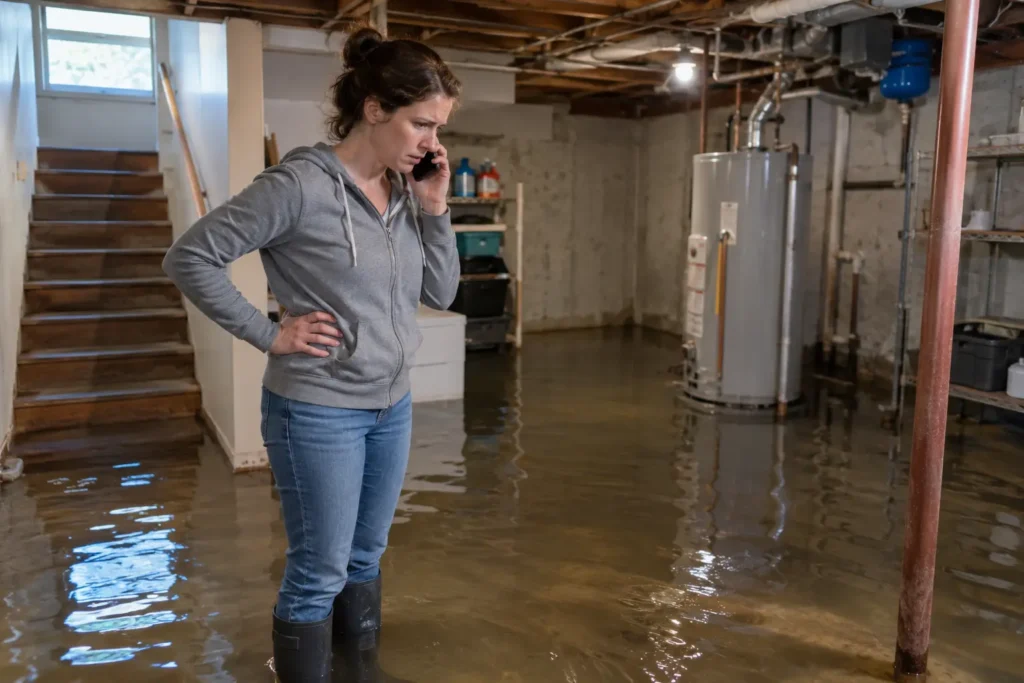
You walk into the basement and there’s water everywhere. Or a pipe just burst upstairs and it’s coming through the ceiling. Your heart’s pounding and you’re wondering who to call first.
Here’s the good news: you don’t have to figure it out on your own. This guide walks you through exactly who to call, in what order, and what to do while you wait for help. Time matters here. The longer water sits, the more it soaks into your drywall, floors, and framing.
The Quick Answer
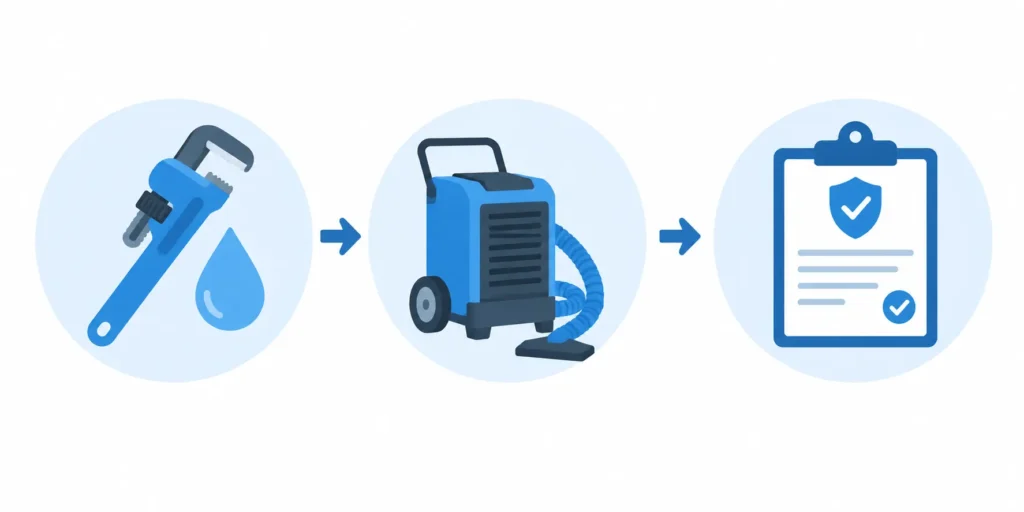
For most situations, here’s the order:
- A water damage restoration company to get the water out and dry everything.
- A plumber to fix whatever caused the leak.
- Your insurance company to start a claim.
If water is still gushing, shut off your main water valve first, then start making calls.
First, Make Sure You’re Safe
Before you grab your phone, take care of these things:
- Shut off the water at the main valve if a pipe or appliance is the problem.
- Kill the power to the wet area at your breaker box, but only if you can get to it without stepping in water. If you can’t, stay out and call your electric utility.
- Stay out of standing water if there are outlets, cords, or appliances nearby.
- Get out of the house if you smell gas, see a sagging ceiling, or think there’s sewage in the water.
Once everyone’s safe, it’s time to call.
Who to Call Based on What Happened
The right first call depends on the situation. Here’s a quick cheat sheet:
| What happened | Call first | Then call |
|---|---|---|
| Burst or frozen pipe | A plumber if you can’t stop the water. Otherwise, a restoration company. | Insurance |
| Flooded basement after heavy rain | Restoration company | Insurance (check your coverage) |
| Water heater failure | Plumber | Restoration company, then insurance |
| Roof leak or ice dam | Roofer to stop the leak | Restoration company, then insurance |
| Sewage backup | Restoration company that handles sewage | Plumber, then insurance |
| Washer or dishwasher leak | Shut off the supply, then a restoration company | Insurance |
Here’s the simple way to think about it: a plumber fixes the cause, and a restoration company fixes the damage. A lot of people call the plumber and stop there. Then the wet drywall and subfloor stay damp, and mold shows up a few days later.
Why a Restoration Company Should Be One of Your First Calls
A plumber can fix your pipe. But most plumbers don’t have the gear to pull water out of your walls or dry out your floors. Restoration crews bring:
- Pumps and extractors to remove standing water fast
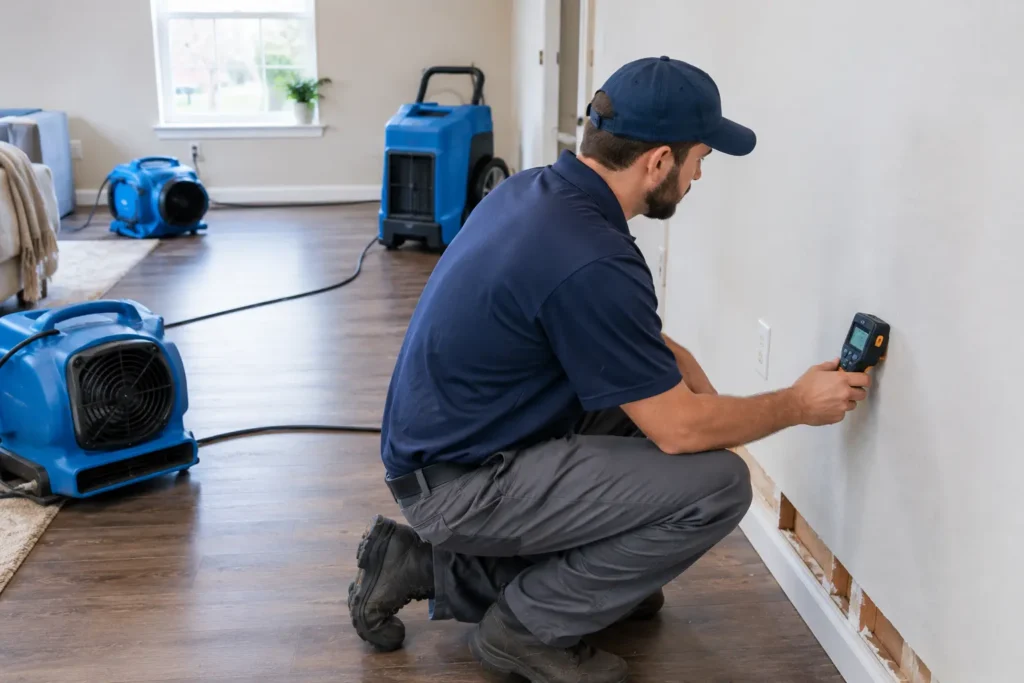
- Moisture meters and thermal cameras to find water hiding behind walls and under floors
- Industrial fans and dehumidifiers to dry everything out completely
- Documentation like photos and moisture readings that back up your insurance claim
Here’s why speed matters. Mold can start growing in as little as 24 to 48 hours in damp conditions. Something can feel dry to the touch and still be holding moisture inside. If you want the full picture, check out why emergency water damage cleanup is so important for Rockford homeowners.
When to Call a Plumber
You’ll want a plumber when:
- A pipe has burst or frozen and you can’t stop the leak by shutting a valve
- Your water heater, supply line, or a fixture has failed
- The leak needs a permanent repair before drying can wrap up
Let the plumber know a restoration company is also coming. The two crews can work at the same time, which saves you a lot of hassle. Dealing with a burst pipe right now? Take a look at our page on burst pipe water cleanup in Rockford.
When to Call Your Insurance Company
Call your insurance company the same day, as soon as things are under control. What’s covered depends on your policy, but here’s the general picture:
- Sudden, accidental damage like a burst pipe or a failed appliance is often covered.
- Flooding from heavy rain or groundwater usually isn’t covered by a standard homeowners policy. That typically takes separate flood insurance.
- Sewer or drain backup is often excluded unless you added an endorsement.
- Slow leaks that went unnoticed are commonly excluded.
Not sure what you have? Call your agent and ask. Don’t put it off because you’re worried it won’t be covered. The sooner you report it, the better.
What to Document for Your Claim
- Photos and video of every affected room and the source of the water, before you move anything
- A list of damaged belongings with rough values
- Receipts for any emergency expenses
- Names and phone numbers of everyone you talk to at the insurance company
A good restoration company will give you moisture readings and a written scope of work to support your claim. Wondering what this might run you? Here’s our Rockford water damage restoration cost guide.
What You Can Do While You Wait
A few simple steps can keep the damage from getting worse, as long as it’s safe to do them:
- Move furniture, electronics, and valuables to a dry room
- Pull up wet rugs and prop furniture up off soaked carpet
- Open windows and run fans if the weather allows
- Put foil or plastic under furniture legs to prevent stains
Please don’t:
- Use a regular shop vac or household vacuum on standing water
- Turn on ceiling lights or fans if the ceiling is wet or sagging
- Wait more than a day to get help
- Assume “it feels dry” means it’s dry
Want to know what you can handle on your own and what you can’t? Read our guide on how to fix water damage.
What Happens When a Restoration Crew Shows Up
Here’s what a typical visit looks like:
- Inspection and moisture mapping. The crew finds out how far the water has spread.
- Water extraction. Standing water gets pumped and vacuumed out.
- Removing what can’t be saved. Soaked drywall, carpet padding, and insulation often have to come out.
- Structural drying. Air movers and dehumidifiers run, usually for a few days.
- Daily monitoring. The team checks moisture levels until everything’s dry.
- Cleaning and treatment of affected surfaces.
- Repairs. Rebuild work can be done by the same company or a contractor you choose.
If any moisture gets left behind, mold can follow. To learn more, see our guides on mold after water damage in Rockford and preventing mold after water damage.
Water Damage in Rockford: What We See Most
Living in northern Illinois comes with its own water problems:
- Winter freeze-ups. Pipes in exterior walls, garages, and crawl spaces freeze and burst when temperatures drop. Shut off the water, open a faucet to relieve pressure, and call for help.
- Spring thaw and heavy rain. Saturated ground can push water through basement walls and floor cracks. Check your sump pump before the storms roll in.
- Older homes. Aging supply lines, old drain pipes, and worn-out water heaters fail more often.
How to Pick a Restoration Company
When you’re calling around, ask these questions:
- Do you answer 24/7, and will a real person pick up?
- Are you licensed and insured? Can you show proof?
- Are your technicians IICRC-certified?
- Will you document moisture readings for my insurance company?
- Can I get a written estimate before work starts?
- Do you work directly with insurance companies?
Watch out for anyone who demands a big payment upfront or pressures you to sign something before explaining it.
Need Help With Water Damage in Rockford?
If you’ve got water in your Rockford home or business, don’t wait and hope it dries on its own. Our team can help with water removal, drying, and the paperwork your insurance company will want.
Call us at (815) 324-8004 or reach out here and tell us what’s going on. You can also read more about our water damage restoration services in Rockford, IL and learn about our team.
Frequently Asked Questions
Should I call a plumber or a restoration company first?
If water is still flowing and you can’t shut it off, call a plumber. If the water’s stopped, call a restoration company right away. Most of the time you’ll need both.
Does homeowners insurance cover water damage?
It depends on what caused it. Sudden things like a burst pipe are often covered. Flood water and sewer backup usually need their own coverage. Check your policy or ask your agent.
How fast do I need to call someone?
As soon as it’s safe. Water spreads into hidden spots quickly, and mold can start in a day or two.
Can I dry it out myself?
A small, clean spill you catch right away might be fine. Anything bigger, older than a day, or hiding inside walls needs professional equipment.
What if the water is dirty or from a sewer?
Stay out, keep kids and pets away, and call a professional. Contaminated water is a real health risk.
Leave a Reply